
Are Museums and Libraries the New Feel-Good Atmosphere for Club Goers?
Why museum after-hours and library late nights in NYC are redefining alternative nightlife for grown music lovers.

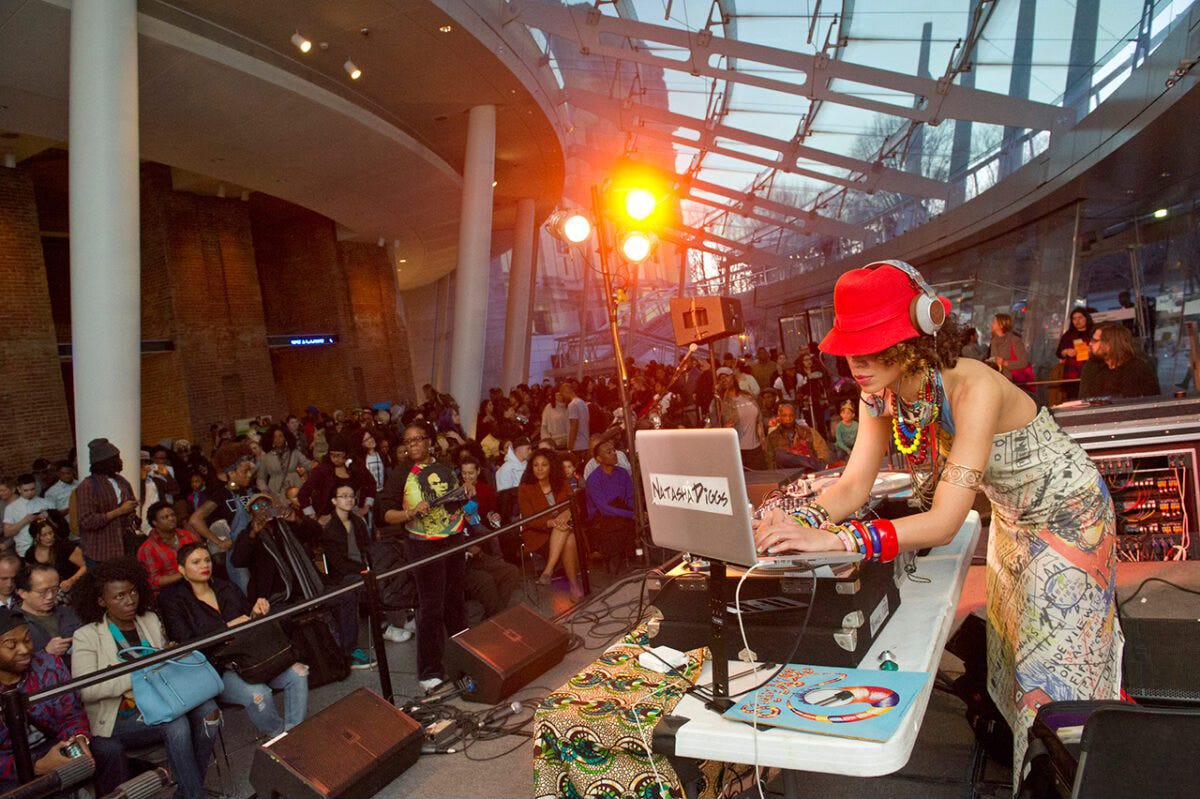
At 7:12 p.m., someone is dancing beneath an ornate chandelier, surrounded by paintings carefully curated generations ago.
The light is golden. The floors are polished. The art was never meant to compete with a bassline, yet here we are. A DJ is tucked into the corner where a docent usually stands. The beat moves through marble and memory. A cocktail clinks against crystal somewhere nearby.
This is not a club.
And somehow, it feels better.
If you are over 35 and still love music but no longer love chaos, you already understand the shift. You want the energy. You just do not want the aftermath.
Traditional NYC nightlife still demands endurance, late starts, crowded floors, expensive drinks, outfits that feel like negotiations. Somewhere between the line outside and the 1:00 a.m. second wind, fun quietly becomes work.
But search “alternative nightlife NYC” or “museum after hours DJ” and something unexpected surfaces. Museums. Libraries. Cultural institutions with real sound systems and something to say.
Across the city, spaces like the Whitney Museum of American Art, The Morgan Library, the Brooklyn Museum, and the New York Public Library are hosting after-hours events that blend DJs, art, cocktails, and community into something that feels curated. And I stumbled into this world almost by accident.
One evening after work, I went to the Whitney’s Free Friday Night. When I heard there would be a live DJ, I pictured something gentle and ambient, Olivia Dean playing softly through the galleries, her warm vocals floating above the hum of quiet conversation. I imagined an easy, unhurried evening. A leisurely stroll past contemporary art, a simple drink in hand, the city slowing down around me.
I was wrong in the best possible way.
Before I even arrived, I made the mistake of looking up the Whitney’s Friday nights on social media. Review after review told the same story, and it was nothing close to what I had imagined. People were dancing. Full dancing. A MC was on the mic urging the crowd onto a makeshift dance floor. Bass was moving through the building like the walls had always been built for it. The comments were full of people saying they came for the art and stayed for the party.
What I had pictured as an Olivia Dean evening was apparently closer to a night out, just one that happened to be surrounded by some of the most important American art of the last century.
And the music.
The music was never a single mood or genre. These events pull from everywhere and make no apologies for it. Afrobeats that move your shoulders before your brain has a chance to catch up. Smooth R&B that slides your feet left and right without any conscious decision. Jazz that lulls your ears into a sweet, half-remembered place. Latin and reggae rhythms that find your hips and hold them. Pop that you sing out loud even when you know your pitch is somewhere in the parking lot. And on the right night, techno that bounces off marble and soaring ceilings in ways a basement club could never engineer. The architecture becomes part of the sound. The room earns its place in the set.
Here is the honest confession: I learned that the specific DJ set I had heard about had actually played the Friday before I arrived. I missed it by exactly seven days. But the evening I walked into was already more than I had prepared for, the energy, the light, the crowd that had come for more than a scene. I did not feel cheated. I felt like I had been given a preview of something I needed to come back for properly.
I left knowing two things. The Whitney had already exceeded every quiet expectation I walked in with. And next time, I would read the calendar twice.
What makes these events work is their balance. Entry is often first come, first served or a simple RSVP. No dress code anxiety. No velvet rope theater. No obligation to stay with your bestie well passed 2:00 a.m. just to justify the effort.
You arrive at 6:30. You dance at 8. You leave at 10 while the night still feels intact.
Instead of pressing shoulder to shoulder in a dark room, you centered around the DJ and as long as the DJ is spinning tunes, there’s no slowing down. The music layers itself onto architecture and history in a way a nightclub simply cannot replicate.
There is something quietly rebellious about dancing in spaces that once demanded silence. Something genuinely energizing about bass rippling beneath ceilings built for contemplation. The spiral ramp, the reading room, the rooftop with the city unfolding beyond it while a DJ transitions from Afrobeats into a Latin groove into a R&B record you forgot you loved, these are not the expected settings for a night out. That is exactly the point.
Museums and libraries are not replacing clubs. They are refining what going out can look like for people who still want to be out. The experience feels grown without feeling dull. Intentional without feeling precious.
The smartest party in New York might not be behind a velvet rope. It might be under a skylight. Along a spiral ramp. In a reading room. On a museum rooftop with the city unfolding beyond you while a DJ moves seamlessly from jazz to techno to something in between and every transition makes perfect sense because the room itself is doing half the work.
And if you missed the DJ at one of these cultural institutions, do not scroll past it in disappointment. Check the website. There are always more happening, each week bringing a different sound, a different space, a different reason to show up.